Showing posts with label Citrus Crate Labels. Show all posts

Thursday, March 21, 2024

From the Archives: Citrus Families and Citrus Labels

Crate labels have a long-standing history in the Florida Citrus Industry illustrating important objects, people or landscapes to the specific brand and grower’s association. This can be seen in many labels that illustrate different family members of Citrus company owners. 

One example of this is the Baby-Ade label. The label features a baby with an orange and a tropical landscape. The baby on the label is a part of the Lee family - the father of Elizabeth Lee Barron. The Baby-Ade brand was a part of the Lee family corporation out of Tampa, Florida. This citrus company grew and processed oranges, grapefruits, and tangerines. Many of the other Lee family members were also featured on their company’s label including Aunt Miriam, Aunt Rosemary, Aunt Rowen Katherine, and even the family dog named Juno, also known as “Goo Goo.” 


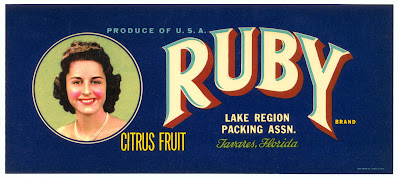
Citrus label families have even seen cross over into the Florida Citrus Queen competition. The Prevatt family featured Ruby Prevatt on their Ruby label. The Ruby brand was a part of the Lake Region Packing Association and was owned and operated by the Prevatt family. Ruby Prevatt was a part of the 1939 Florida Citrus Queen competition and was sponsored by the Tavares Woman’s Club. She is also the daughter of Florida Citrus Hall of Fame inductee Jennings Bryant “Babe” Prevatt.


Label advertisement and artwork played a large role in promoting the citrus industry. The ability to implement family members or scenes into the labels allows for a greater connection to customers and the importance of citrus in the family diet. 

All of the labels mentioned above and more can be viewed in the McKay Archives Citrus Label digital collection at https://archives.flsouthern.edu/digital/collection/labels/search/page/1


Written by Emily Allen, Florida Citrus Hall of Fame Fellow
In partnership with Florida Southern College’s McKay Archives Center
Spring 2024

---

Sources:

Calise, Gabrielle. “A Tampa Librarian Wants to Save Florida’s Vanishing Citrus Labels — And Her Family History.” Tampa Bay Times (St. Petersburg, Florida), March 16, 2021. https://www.tampabay.com/life-culture/history/2021/03/16/a-tampa-librarian-wants-to-save-floridas-vanishing-citrus-labels-and-her-family-history/

[Miss Ruby Prevatt]. The Orlando Sentinel (Orlando, Florida), January 22, 1939.


Monday, February 26, 2018

DIY Citrus Frost Prevention

Here in Central Florida temperatures can vary drastically. While this is not particularly
damaging to most native plants, citrus trees can suffer if the temperature is not stable enough.
Citrus plants have been known to survive temperatures of about 20 degrees fahrenheit, but this
is not without damage to the tree. Many small citrus trees lack cold hardiness and can suffer
damage during the chilly winters and brisk spring months.
When the temperatures start falling, many large citrus groves warm their plants with
warm water sprayers, or semi-flammable products to ensure that their groves stay at a constant
temperature. This process ensures that the trees in their groves suffer less shock when the
temperatures plummet, and is said to help keep the plant alive for longer. This is a remarkably
effective process for large scale growers, but what about those of us who have citrus trees at
home? How can you ensure the health and safety of your own trees when you do not have access
to the large scale warming methods that are used at the nearest grower?
Luckily, this is a fairly simple task, and with a little help from tools you likely have
around the house, you can ensure that your trees remain strong, tall, frost damage free, and
bearing fruit for years to come.
If you happen to grow a lemon, orange, grapefruit, or lime tree in your yard, you may be
concerned about how to ensure that it continues to gain cold hardiness during its juvenilicy. One
of the easiest ways to prevent the frost build up and minor injuries that can result from chilly
weather is by watering your tree with copious amounts of warm water in the days before a
freeze. This will help your plant face the rough weather with well hydrated roots, which will help
to keep the plant flushing out toxins, as well as keeping the plant tissue at about 32 degrees
fahrenheit. It is also a method to ensure that the roots remain warm, since moist soil usually
radiates more heat than dry soil.
Another common at home method, is to wrap the trunk of your tree in plastic wrap. This
will also help your tree retain heat, as well as keep the frost off the physical trunk of the tree. If
you are still concerned about the impending weather, try wrapping the trunk in christmas lights
as well, for additional warmth (if you choose to utilize this method, please ensure you are using a
functioning outdoor plug so that you do not suffer a nasty shock, or risk lighting your tree on
fire). This method is highly effective, but it only protects the trunk of the tree. Unfortunately, this
will not protect the fruit your tree has born.
Unfortunately, fruit is very susceptible to damage via inclement weather. Since oranges,
grapefruits, lemons, and limes are primarily made up of sugars and liquid, they freeze and spoil
very quickly. The best way to salvage your fruit is to just harvest it immediately. While it is
unfortunate that you plant will no longer have any fruit on it, the more important thing to
remember is that doing this will ensure that your plant will still be able to bare fruit in the future.
Large, mature trees usually withstand cold damage better than young samplings, although
this is not always true.
Overall, citrus trees survive best in warm, stable weather, but this does not mean that you
cannot have a citrus tree of your very own. As long as you are able to keep the temperature
relatively stable, you can enjoy fresh fruit right from the comfort of your own backyard. Just
make sure to take a tip from your local growers and keep your trees wet, wrapped, and warm.
If you’re interested in learning more about the citrus industry, and the history behind it, please feel free to stop by the Mckay Archives Center at Florida Southern College, as we currently have an exhibit case dedicated entirely to citrus frost, as well as an entire gallery of citrus history.
Do you have any at home tips for keeping your trees warm throughout the last few weeks
of chilly weather? If so, let us know in the comments section below!


Works Cited
Dan Gill, The Times-Picayune garden columnist. “How to Protect Citrus Trees from Freezes.” NOLA.com, NOLA.com, 10 Dec. 2016, www.nola.com/homegarden/index.ssf/2016/12/how_to_protect_citrus_trees_fr.html.
Data, US Climate. “Temperature - Precipitation - Sunshine - Snowfall.” Climate Florida - Temperature, Rainfall and Average, www.usclimatedata.com/climate/florida/united-states/3179.
“How to Cover a Citrus Tree in Freezing Weather.” Home Guides | SF Gate, homeguides.sfgate.com/cover-citrus-tree-freezing-weather-59756.html.
“Q&A: How Can I Protect My Citrus Tree from Frost?” Horticulture, 13 July 2010, www.hortmag.com/weekly-tips/citrusfrostprotection.

“Http://Ljournal.ru/Wp-Content/Uploads/2017/03/a-2017-023.Pdf.” 2017, doi:10.18411/a-2017-023.
Written By: Emma Morton
Student Fellow at the Florida Citrus Hall of Fame
In partnership with Florida Southern College’s McKay Archives Center

Wednesday, November 8, 2017

A Citrus Thanksgiving

Thanksgiving Citrus Recipes to Wow your Friends and Family!

Citrus-Roasted Turkey with Lemon Aïoli

With Thanksgiving right around the corner many families are beginning to plan out their
delicious dinners. While many families have their own traditions, citrus is a great way to put a
new spin on an old family classics! Listed below are a just a few recipes that can help your
Thanksgiving be healthier, unique, and supremely special!

Citrus-Cranberry Sauce

Total Time: 30 min
Prep: 10 min Cook: 20 min
Yield: 3 cups

Ingredients:
2 large navel oranges
1 (12-ounce) package fresh cranberries, picked over
3/4 cup sugar
1/4 cup water
1/8 teaspoon ground ginger
1/2 teaspoon fresh lemon juice
1/2 teaspoon fresh lime juice
Directions: Remove the peel and pith from oranges with a paring knife, cut each section into
quarters. In a heavy saucepan over medium heat combine oranges, cranberries, sugar, water,
and ground ginger. Cook for 15 minutes, stirring occasionally. Remove from heat and stir in
lemon and lime juice. Cover sauce and chill before serving. Can be made up to 3 days prior to
serving.

Citrus Sweet Potato Pie
Makes: 12 servings
Carb Grams Per Serving: 25

Ingredients:
1 1/2 cups mashed, cooked, peeled sweet potatoes (about 2 medium)
1/4 cup sugar or sugar substitute* equivalent to 1/4 cup sugar
1 teaspoon vanilla
1/2 teaspoon finely shredded lemon peel
1 teaspoon lemon juice
1/4 teaspoon ground nutmeg
1/4 cup refrigerated or frozen egg product, thawed, or 1 egg, slightly beaten
1 cup evaporated fat-free milk
1 Baked Oil Pastry (see recipe below)
Frozen fat-free whipped dessert topping, thawed (optional)
Ground nutmeg (optional)

Directions: Preheat oven to 450 degree F. Prepare Oil Pastry. On a well-floured surface, use your
hands to slightly flatten dough. Roll dough from center to edge into a circle about 11 inches in
diameter. To transfer pastry, wrap it around the rolling pin. Unroll pastry into 9-inch tart pan
with a removable bottom or a 9-inch pie plate. Ease pastry into pan without stretching it. Press
pastry into fluted sides of tart pan and trim edges. (Or, if using a pie plate, crimp edge as
desired.) Line pastry with a double thickness of foil. Bake for 8 minutes. Remove foil. Bake for 5
minutes more. Cool on a wire rack while preparing filling.
Reduce oven temperature to 350 degree F. For filling: In a large bowl, stir together mashed
sweet potatoes, sugar, vanilla, lemon peel, lemon juice, and the 1/4 teaspoon nutmeg. Add egg.
Beat lightly with a fork just until combined. Gradually add evaporated milk; stir until combined.
Pour filling into baked pastry shell. To prevent over browning, cover edge of pie with foil. Bake
for 30 to 35 minutes or until a knife inserted near the center comes out clean and edges are
puffed. If necessary to allow pastry to brown, remove foil for the last 5 to 10 minutes of baking.
Cool on a wire rack. Cover and refrigerate within 2 hours.
To serve, remove tart from pan or leave pie in pie plate. Cut tart or pie into wedges. If desired,
top each serving with a dollop of dessert topping and sprinkle with additional nutmeg. Makes 12
servings.
*Sugar Substitute: Choose from Splenda Granular or Sweet 'N Low bulk or packets. Follow
package directions to use product amount equivalent to 3/4 cup sugar.

Citrus-Roasted Turkey with Lemon Aïoli
Total Time: 5 Hours
Hands-on Time: 45 Mins
Yield: 10 servings
Seasoning with a citrus-salt rub and stuffing the cavity with lemons and oranges imparts fresh
flavor and citrus fragrance and keeps the turkey extra juicy.

Ingredients:
1 (14- to 16-lb.) whole fresh turkey Citrus-Salt Rub 2 lemons, quartered 2 small oranges,
quartered 2 celery ribs, chopped 1 onion, coarsely chopped 2 tablespoons chopped fresh oregano
2 teaspoons chopped fresh thyme 2 teaspoons black pepper 1/2 cup extra virgin olive oil, divided
6 tablespoons fresh lemon juice, divided 1 1/2 teaspoons kosher salt, divided Kitchen string 3
tablespoons fresh orange juice 2 cups reduced-sodium chicken broth Lemon Aïoli

Directions:
Remove giblets and neck from turkey, and rinse turkey with cold water. Drain cavity well; pat
dry. Rub 4 Tbsp. Citrus-Salt Rub into cavity. Rub skin with remaining rub. Cover and chill 18 to
24 hours.
Preheat oven to 350°. Rinse turkey; drain cavity well, and pat dry. Toss together lemons, next 6
ingredients, 1/4 cup olive oil, 3 Tbsp. lemon juice, and 1 tsp. salt in a large bowl; spoon mixture
into cavity of turkey. Tie ends of legs together with kitchen string; tuck wingtips under. Place
turkey, breast side up, on a lightly greased roasting rack in a large roasting pan. Whisk together
orange juice and remaining 3 Tbsp. lemon juice and 1/2 tsp. salt in a bowl; gradually whisk in
remaining 1/4 cup oil until blended. Brush half of orange juice mixture over turkey. Bake at 350°
on lowest oven rack 1 hour. Brush remaining orange juice mixture over turkey, and bake 45
more minutes. Pour 1 cup broth into pan; bake 45 minutes. Pour remaining 1 cup broth into pan;
bake 45 more minutes or until a meat thermometer inserted into thickest portion of thigh
registers 165°. Remove from oven, reserving pan juices. Cover loosely with foil; let stand 30
minutes. Transfer to a platter; serve with pan juices and Lemon Aïoli.

If any of these recipes interested you, be sure to check out our Facebook page and Instagram
account where we post new citrus recipes every Wednesday!

Facebook: https://www.facebook.com/floridacitrushalloffame/
Instagram: citrusarchives


Works Cited
“Citrus-Roasted Turkey with Lemon Aïoli.” MyRecipes ,
www.myrecipes.com/recipe/citrus-roasted-turkey.
“Citrus-Sweet Potato Pie.” Diabetic Living Online ,
www.diabeticlivingonline.com/recipe/pies/citrus-sweet-potato-pie.
Network, Food. “Citrus-Cranberry Sauce.” Food Network , Food Network, 14 Nov. 2013,
www.foodnetwork.com/recipes/citrus-cranberry-sauce-recipe-1909012.

Written By: Emma Morton
Student Fellow at the Florida Citrus Hall of Fame
In partnership with Florida Southern College’s McKay Archives Center

Thursday, April 13, 2017

Citrus Label Tour

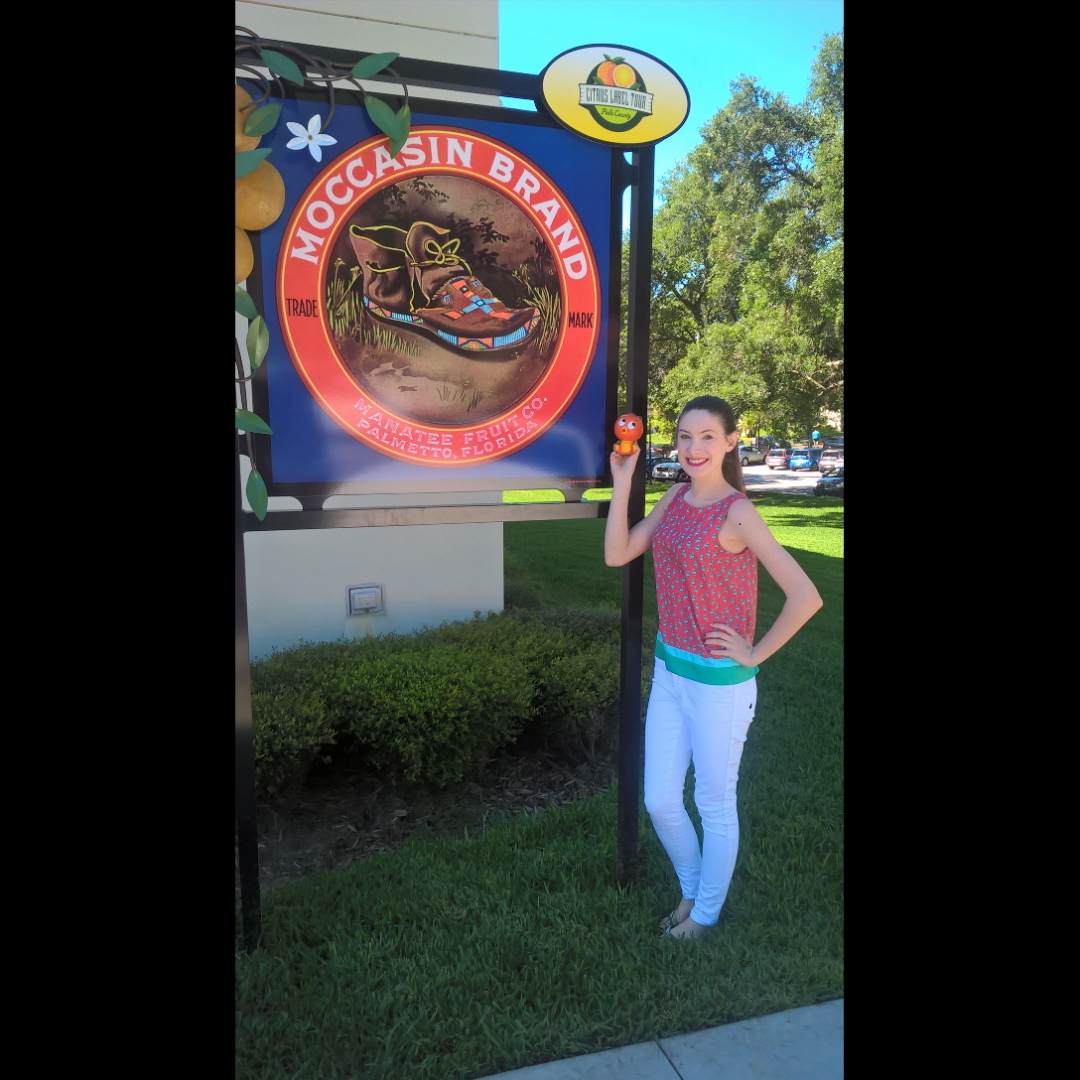
Earlier this year residents of Lakeland Florida noticed a new sign pop up outside of The Mckay Archives at Florida Southern College. The sign is simply the image of a beautiful crate label from Florida Citrus’s great past and has brought up many conversations among Lakelanders. Many people are wondering why, and the reasoning is very simple: Crate Labels are a lost art. Nowadays it is so common for companies to take logos and branding for granted. So many logos look almost identical and, as a result, have become easy to overlook.
Citrus crate labels were made to have certain brands of citrus fruits stand out from other more mundane brands and it was very effective. The images were eye-catching and the slogans occasionally scrawled across them were fun. Unfortunately, so many brands of citrus have diverted from this and it is quite a shame. So many people do not even remember how beautiful the crate labels were. That is why the sign was put up. To remind others how special the citrus industry is here in Florida, and to educate those who did not realize that crate labels were such a necessary part of the Florida Citrus Industry’s proud heritage.
The sign is a part of the Citrus Label Tour of Polk County and will be up at the Mckay Archives for quite awhile. If you have any questions about it, or about the Citrus Label Tour, feel free to call us at 863-680-4164.

17835032_1477309898946321_3202337299843422865_o.jpg

Written By: Emma Morton
Student Fellow at the Florida Citrus Hall of Fame
In partnership with Florida Southern College’s McKay Archives Center

Thursday, March 23, 2017

The 2017 Citrus Hall of Fame Inductees!

Hey Citrus Fans, for those of you who do not know, The Florida Citrus Hall of Fame inducted three new men. On March 10th, The Florida Citrus Hall of Fame inducted James H. “Jim” Ellis of Bartow, Florida, T. Ralph Robinson (deceased), and Michael W. Sparks of Apollo Beach, Florida. These three distinguished men all dedicated their lives to helping promote the citrus industry right here in the sunshine state, and the Florida Citrus Hall of Fame is honored to have these men join the ranks of the many others who have helped to advocate for the citrus industry.
Jim Ellis graduated from Florida Southern College, and while he was a student he was president of the Citrus Club and received the Florida Citrus Mutual Award due to his dedication to the field of citrus. Ellis is currently is in charge of the Citrus License & Bonds in the Division of Fruits & Vegetables for the Florida Department of Agriculture and Consumer Services.
T. Ralph Robinson (1876-1967) graduated from Syracuse University and used to live in Syracuse, New York, but moved to Terra Ceia, Florida in 1910. During his life he was president of the Florida State Horticultural Society and he has a biography listed in “American Men of Science” and “Who’s Who.” He also published about 80 papers on horticultural subjects.
Mike Sparks has worked with the citrus industry for much of his life. For 29 years he worked with the Florida Department of Citrus (FDOC) in several capacities. For the past 10 years he has held the position of Executive Vice President and CEO of Florida Citrus Mutual in Lakeland, Florida (which happens to be the largest citrus grower trade association in the world) and has helped FCM to start incredible long-term appropriations for pest and disease research. Because of his efforts he has helped secure $125 million in mandatory Farm Bill funding that will benefit the citrus industry greatly.
These men have secured their place in citrus history through their unprecedented commitment to the Florida Citrus Industry. Thanks to their efforts, the Florida Citrus Industry will continue to grow and continue to forward research for advancements in this field of agriculture. From all of us here at the Florida Citrus Hall of Fame, we welcome Mr. Ellis, Mr. Robinson, and Mr. Sparks into the Citrus Hall of Fame family.

Written By: Emma Morton
Student Fellow at the Florida Citrus Hall of Fame
In partnership with Florida Southern College’s McKay Archives Center
Monday, November 7, 2016

Citrus Cosmetics!

Hey Citrus Fans!

It’s no secret that everyone wishes they had healthier, more radiant skin and with cooler temperatures on the horizon, it can often be hard to maintain it. But, did you know that citrus can be used to achieve that glow all year round? Citrus fruits have been known to soften skin, and bring out that youthful glow that everyone is searching for due to the high levels of citric acid the fruit contains.
The acid, which is known to kill bacteria, is often found in high-end cosmetics -- with a hefty price tag attached. But it turns out that you can make many of your own citrus infused lotions and cosmetics at home for a fraction of the cost! A few tips for achieving that perfect oh-so-natural look include: cutting a lemon in half and placing chapped or rough elbows or fingers directly into the fruit for five to ten minutes a day to soften the skin and keep the damage from returning. Another useful tip (that I personally have tried and liked) is to soak a cotton ball with lemon juice twice a day and apply the cotton-ball anywhere that you may have discoloration in the skin due to age or sun exposure. In about six weeks, you will likely see that the spots have faded or are completely gone.
Citrus is not just for skin care, though. The properties that make it so useful on the skin also make it very effective in your hair. Grapefruit is particularly good for your hair. If you would like to try and jump on the citrus-cosmetic bandwagon, might I suggest this cheap alternative to styling gel (which can have many harsh chemicals and dyes) which can be found Mother Earth Living.
Everyone knows that citrus fruits are good for their insides, but not everyone knows how amazing they can be for their outsides. If you decide to give citrus cosmetics a try, send us a message about how well they worked for you (or recipes you liked) in the comments section, or on our Facebook Page (The Citrus Hall of Fame).

Thank you!


Works Cited
Publications, Inc. Ogden. "Body & Soul: Pink Grapefruit Styling Gel for Extra Body - Heal - Herb Companion." Mother Earth Living. N.p., 27 June 2012. Web. 07 Nov. 2016.


Written by Emma Morton
Student Fellow at the Florida Citrus Hall of Fame

In partnership with Florida Southern College’s McKay Archives Center

Wednesday, August 31, 2016

Want to Boost your Brain Power?

Hey Citrus Fans!

With classes starting up, many students (and professors) are looking for ways to improve their cognitive abilities, while also keeping away that dreaded “freshman fifteen.” Well, the answer is surprisingly simple. Studies have shown that drinking 500ml (roughly a pint) of orange juice a day can drastically improve memory, and help maintain a healthy weight. This is likely due to flavonoids, which are chemicals found in abundance in fresh oranges and other citrus fruits. According to Ben Spencer, author of the article Could Orange Juice Boost Brain Power?, “Scientists are not exactly sure how this works, but they suspect the chemicals (flavonoids) may improve blood flow, protect neurons against oxidative damage and increase the efficiency with which neurons transmit signals.” In layman's terms, flavonoids improve your memory, improve your comprehension of information, and do all kinds of good things that keep your body running normally.
This has been documented in a study that shows that this is especially true in older men and women who may be lacking flavonoids in their diets. Aside from oranges, blueberries, blackberries, apples, prunes, strawberries, grapes, peppers, and celery are all found to be packed with flavonoids. Therefore, adding a few more glasses of delicious Florida orange juice to your diet, or another basket of blueberries to your shopping cart might be just the thing you need to ensure that you start this semester with bright eyes and a healthy mind.

Works Cited:
Olson, Samantha. "Fruits And Vegetables With High Levels Of Flavonoids May Prevent Weight Gain." Medical Daily. N.p., 28 Jan. 2016. Web. 25 Aug. 2016.
Spencer, Ben. "Could Pure Orange Juice Boost Brain Power?" Dailymail.uk. Dailymail, 15 May 2015. Web. 25 Aug. 2016.

Written by Emma Morton
Student Fellow at the Florida Citrus Hall of Fame
In partnership with Florida Southern College’s McKay Archives Center

Tuesday, December 1, 2015

See You Later, Citrus


            A year and a half have passed since I first started with the Florida Citrus Hall of Fame here at the Florida Southern College’s McKay Archives Center. Though I can hardly believe it, with graduation arriving soon, my time here is coming to an end. Thankfully, I will be leaving with many experiences to look back on, as well as newly acquired skills on which I can now rely.

            Looking back, I’m amazed at the many projects and collections I have worked on since starting here. I have researched and written articles and blog posts on several topics, such as the inductees, special events, and crate labels. I have also scanned, inventoried, and archived many historical photographs and documents on the Florida Citrus Industry from different collections, like the Jerry Chicone Crate Label Collection and Anthony Whiting Crate Label Collection. In addition, I had the opportunity to present my paper on the Florida Citrus Queens/Miss Florida Citrus at the Florida Conference of Historians. Oh, and I can’t forget the chance I got every day to share on social media the many interesting facts, articles, and photographs I found related to the citrus industry for others to see and be informed.

            As a plus, I had the chance to attend quite a few exciting events too, such as the Florida Citrus Queen/Miss Florida Citrus reunion at Bok Tower Gardens and the Florida Citrus Hall of Fame Inductee Ceremony here at Florida Southern College, both of which gave me the opportunity to meet many interesting people in the Florida Citrus Industry. 

            Lately, I’ve had the opportunity to research, work with, and create digital and physical exhibits for the archives on varying topics with my fellow citrus coworkers. These topics include citrus workers, citrus memorabilia, the Orange Bird, the Florida Citrus Queens/Miss Florida Citrus, citrus crate labels, citrus postcards, the Waverly collection, packinghouses, and the Thomas B. Mack Citrus Archives Collection. These exhibits will hopefully be up in time for next semester. 

            My time here has been one long learning experience. I will never forget the history I have become so fond of, the people I have met, and the memories I have made during my time here. I am so grateful to all of the people who have been involved with my job as well. The friendships I have made here and the research, communication, organizational, and writing skills I have acquired here will stay with me as I continue on to whatever career path is in store for me. 

            However, though I am saying goodbye to my job, I am not saying goodbye to citrus. Like I said in my very first blog post when I started working here, each time I even drink my orange juice, “I’ll be thinking about the history behind it and all of the people involved.”
So see you later, citrus. I will never see you the same way again.


Written by Selys Rivera
Student Fellow at the Florida Citrus Hall of Fame
In partnership with Florida Southern College’s McKay Archives Center